State of Transit: Mobility, Grassroots Power, and the Right to the City
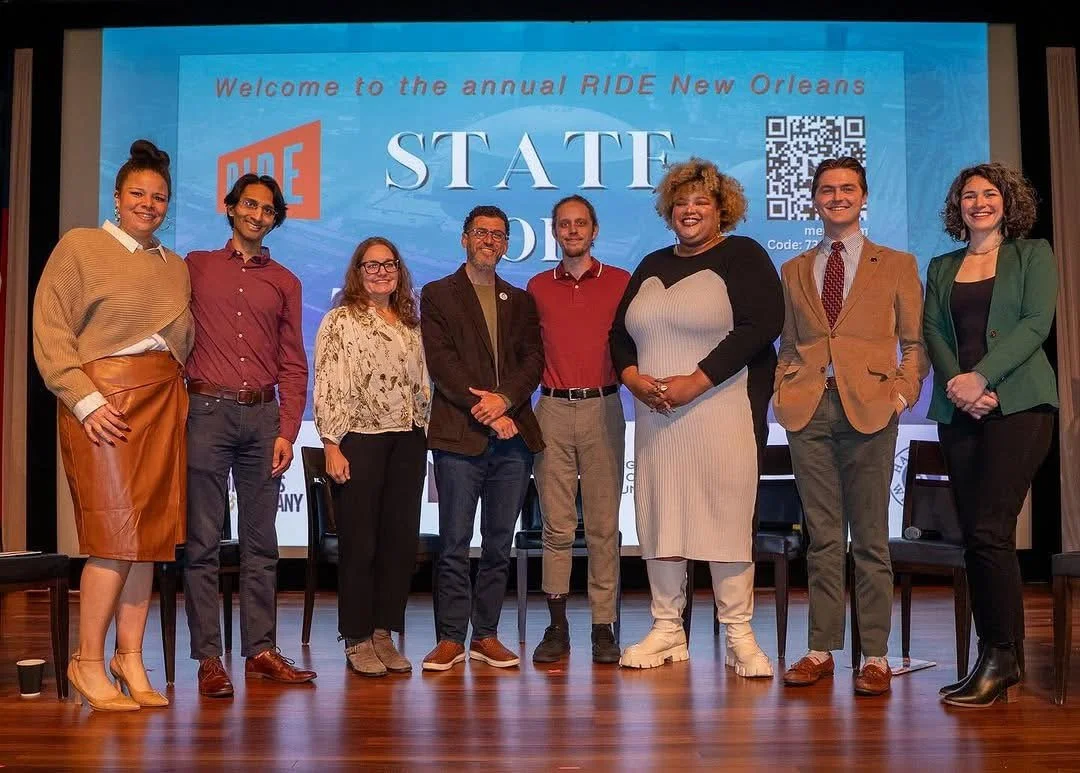
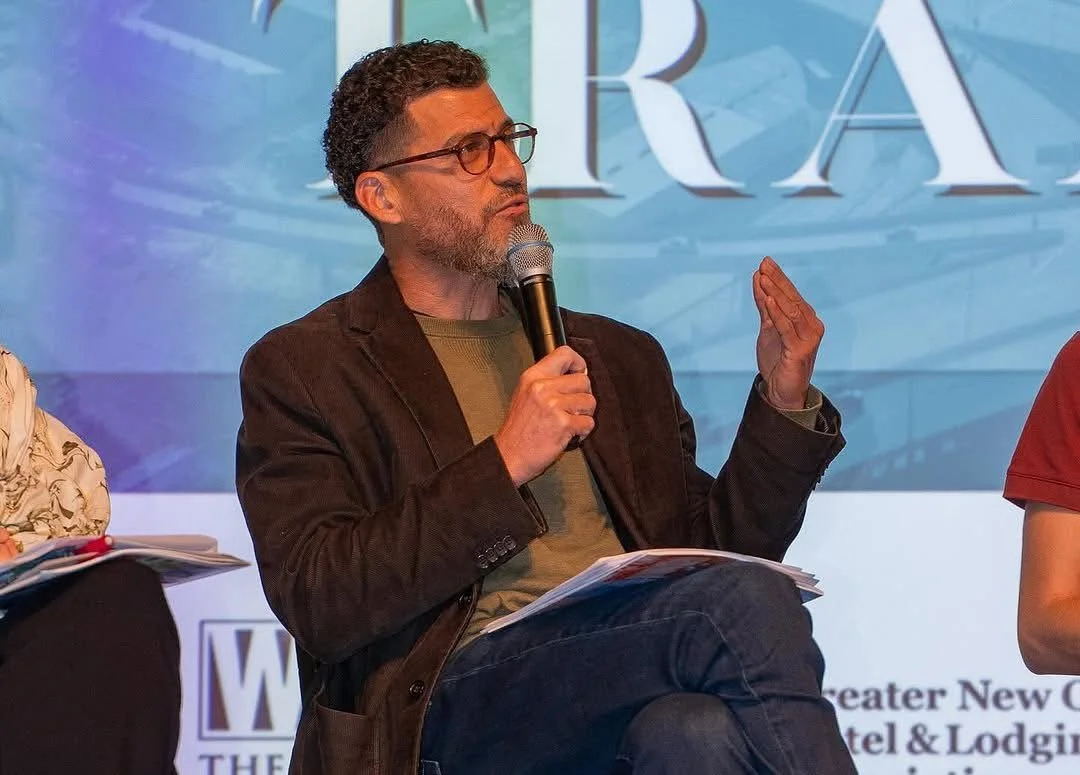
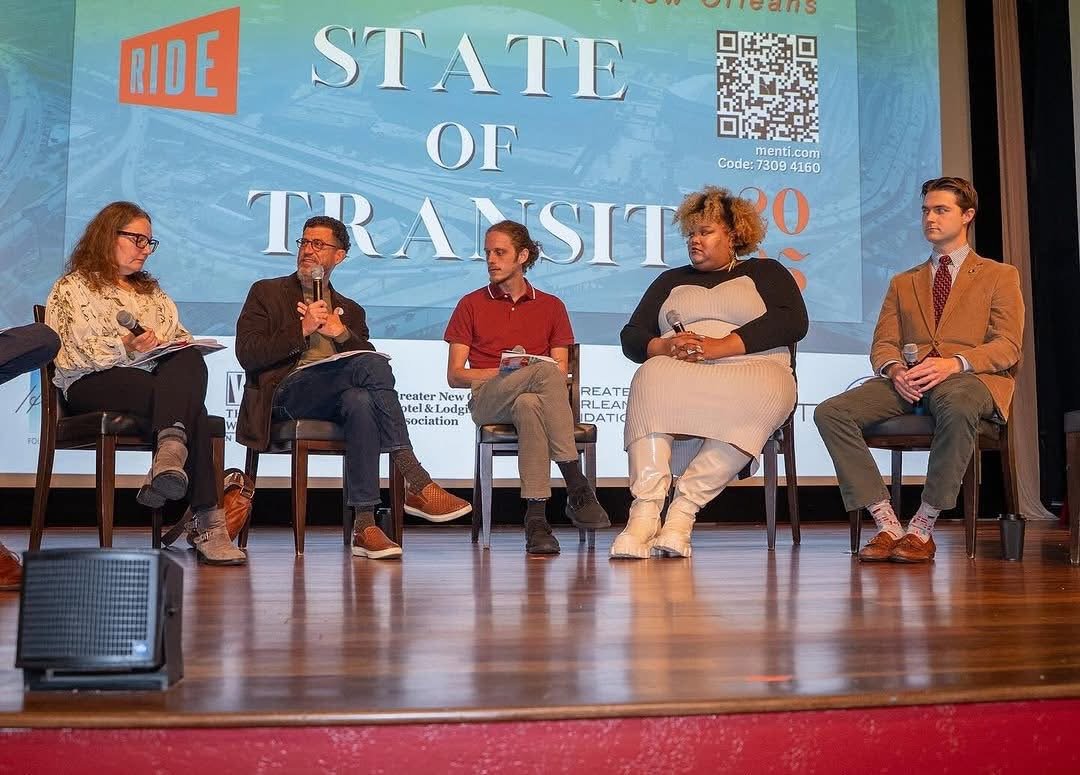
On Tuesday, December 9th, I sat on a panel organized by Ride New Orleans for their annual State of Transit breakfast at the National WWII Museum. The panel brought together advocates, planners, agency leadership, and labor to reflect on the current state of transit in our region and the path forward. We were asked a wide-ranging set of questions—about youth, workforce access, regional coordination, infrastructure, culture, equity, and political will. Rather than treat these questions as isolated policy issues, I want to respond to them as parts of a single political problem—who controls transportation, and in whose interests it is planned.
New Orleans does not lag behind peer cities because we lack creativity, resilience, or care. We lag because transportation here—public transit, walking, and bicycling alike—has never been organized around the needs of the working class. Like housing, healthcare, and education, transportation in this city has been shaped by an economic system that prioritizes profit extraction, tourism, and real estate speculation over human need. Transit is managed just well enough to keep the city functioning, but not well enough to shift power toward the people who rely on it most. A world-class city is not defined by luxury development or marketing slogans, but by whether working people can move safely, affordably, and reliably through it without being forced into car dependency.
This reality is compounded by fragmentation. Our region is divided into parishes that function competitively rather than cooperatively. Agencies are siloed. Planning processes are dispersed and often advisory rather than binding. Fragmentation is not an accident—it is a feature of governance under capitalism. When responsibility is diffuse, accountability disappears, and working people are left navigating systems that were never designed to serve them as a collective force. The absence of a unified regional transit vision is mirrored by the absence of a coherent, citywide grid of separated bicycle lanes, leaving people to improvise their safety street by street.
Nowhere is this clearer than in the question of simply getting to transit in the first place. Ride New Orleans’ work with community partners has shown that a significant share of bus stops lack sidewalks, curb ramps, or safe crossings. This means that before a rider ever steps onto public transit, they are already being excluded—especially seniors, disabled riders, youth, and parents with children. The City and the RTA are under a consent decree to address ADA access, yet the everyday reality remains one of broken infrastructure and dangerous conditions. A transit system cannot be equitable if access to it is treated as optional, and the same is true for bicycling. Without a continuous, protected, citywide grid of separated bike lanes, cycling remains unsafe and inaccessible to the very people who would benefit from it most.
Young people feel this contradiction acutely. They tell us they want to stay in New Orleans, but staying requires more than cultural attachment. It requires the material ability to get to school, to work, to childcare, to healthcare, and to the social infrastructure that makes life sustainable. When buses don’t run early enough or late enough, when service is unreliable, when walking to a stop feels unsafe, opportunity becomes conditional. The city effectively tells young people they are welcome to love New Orleans, but not to build a future here unless they can afford or want to rely on a car. A citywide, interconnected grid of physically separated bike lanes—integrated with transit—would immediately expand young people’s freedom of movement, lower the cost of living, and make opportunity reachable without car ownership.
The same dynamics shape the lives of musicians, artists, and culture-bearers—the very people the city depends on for its global identity. Culture workers rarely move on a nine-to-five schedule. They travel late at night, on weekends, between neighborhoods and venues that are often poorly served by transit. A system designed around office commuters systematically excludes them. If culture is truly essential infrastructure, then mobility for culture-bearers must be treated as essential too, not as an afterthought. A protected bicycle network connected to transit corridors would allow artists and workers to move safely at all hours, reflecting the real rhythms of the city.
Transit investment also raises the question of displacement. Too often, improvements are followed by rising rents and the removal of the very communities that fought for better service. This is not an argument against transit-oriented development, but against development controlled by capital rather than communities. Without anti-displacement protections, collective ownership models, and binding community power, transit—and bike infrastructure—becomes another tool for extraction. Democratic planning must mean that the people who live along transit corridors and bike routes have the power to shape what investment brings, not just endure its consequences.
From a rider’s perspective, regional coordination does not require grand visions to begin. It requires practical solidarity across parish lines: unified fares, coordinated schedules, reliable transfers, shared information systems, and joint planning structures with real authority. Workers already live regionally. Transit governance simply has not caught up to that reality, nor has it fully recognized bicycles as a serious, scalable mode of transportation that can serve as first- and last-mile access across parish lines.
All of this brings us to the question of resources and political will. The City’s Complete Streets Plan is not unrealistic in its goals—it is unrealistic under austerity. You cannot ask departments like DPW to build holistic, people-centered infrastructure—including sidewalks, transit priority, and a citywide grid of separated bike lanes—while simultaneously cutting staff, budgets, and capacity. Under capitalism, austerity is framed as fiscal responsibility. In practice, it is a political choice to shift the costs of governance onto working people while protecting elite interests.
Communication failures across the transit system further reflect this imbalance of power. Riders consistently report feeling unheard, misinformed, or ignored. True communication is not outreach—it is shared decision-making. Agencies must move beyond performative engagement toward structures that give riders real authority: standing councils, community representation, multilingual and accessible information, and transparency about constraints and tradeoffs. Riders are not stakeholders to be consulted. They are the system itself.
These failures point toward a deeper need for democratic centralism in urban planning. Democratic centralism means broad, participatory decision-making at the base, followed by unified and disciplined execution once decisions are made. Applied to transportation, this would mean organized rider, worker, and cyclist assemblies that set priorities, elect recallable delegates, and issue binding mandates to planning bodies. Once collectively decided, implementation would be coordinated across agencies rather than stalled by fragmentation. This is how cities build coherent transit systems and complete bicycle networks rather than disconnected pilot projects.
Grassroots formations like Critical Mass Nola have a role to play here—not simply as advocacy groups, but as political organizers. By building disciplined, working-class participation around transit demands and the demand for a protected, interconnected bike lane grid, we can move from protest to governance, from consultation to power.
Ultimately, the narrative we need to elevate is not about convenience or modernization. It is about class power. Transit is not a social service for the poor—it is the circulatory system of a just city. Bicycles are not recreational accessories; they are public transportation. A healthy transportation system allows working people to live, labor, create, and care for one another with dignity. Community support drives political will, but only when people see themselves not as isolated riders or cyclists, but as a collective force capable of shaping the city they move through every day.
New Orleans has the density, the geography, the culture, and the climate to become the foremost bicycle city in the United States—but only if bicycle commuting is treated as essential infrastructure and integrated fully with public transit. If New Orleans is to build a truly world-class transportation system, it will not come from better branding or isolated pilot projects. It will come from organized working-class power, democratic control over planning, a citywide grid of safe and separated bike lanes connected to transit, and the political courage to prioritize human need over profit.
- Eric Gabourel