Jesus Was an Immigrant: A Reflection on Holiday Traditions, Resistance, and Social Justice
Union Migrante, Nola Nurses United, Unite Here Local 23, United Teachers of New Orleans (American Federation of Teachers Local 527), and Critical Mass Nola posing for a group picture before the Jesus Was An Immigrant Posada.
Dialectical materialists understand reality as grounded in material conditions and shaped through historically developed social relations. In our current reality, those social relations are structured around the profit motive and the exploitation of both human labor and the natural world. While rooted in material reality, dialectical materialists are willing to engage in critical conversation with spirituality. During the holiday season, we can look to faith traditions as social and cultural expressions that reflect lived material conditions and engage them critically to discern what insights they offer about our present reality.
In the Hadith, the Prophet Muhammad (ﷺ) said, "Give the worker his wages before his sweat dries" (al-Sunan al-Ṣaghīr lil-Bayhaqī 2161), emphasizing the Islamic duty for employers to pay laborers promptly, as soon as the job is done, highlighting fairness, avoiding exploitation, and showing respect for the effort expended. This means timely payment is a moral and religious obligation, not just a legal one, with withholding wages being a form of oppression.
In the New Testament, the Apostle James exposed the ruling class in his epistle in writing, “Now listen, you rich people, weep and wail because of the misery that is coming on you. Your wealth has rotted, and moths have eaten your clothes. Your gold and silver are corroded. Their corrosion will testify against you and eat your flesh like fire. You have hoarded wealth in the last days. Look! The wages you failed to pay the workers who mowed your fields are crying out against you. The cries of the harvesters have reached the ears of the Lord Almighty. You have lived on earth in luxury and self-indulgence. You have fattened yourselves in the day of slaughter. You have condemned and murdered the innocent one, who was not opposing you” (James 5:1-6).
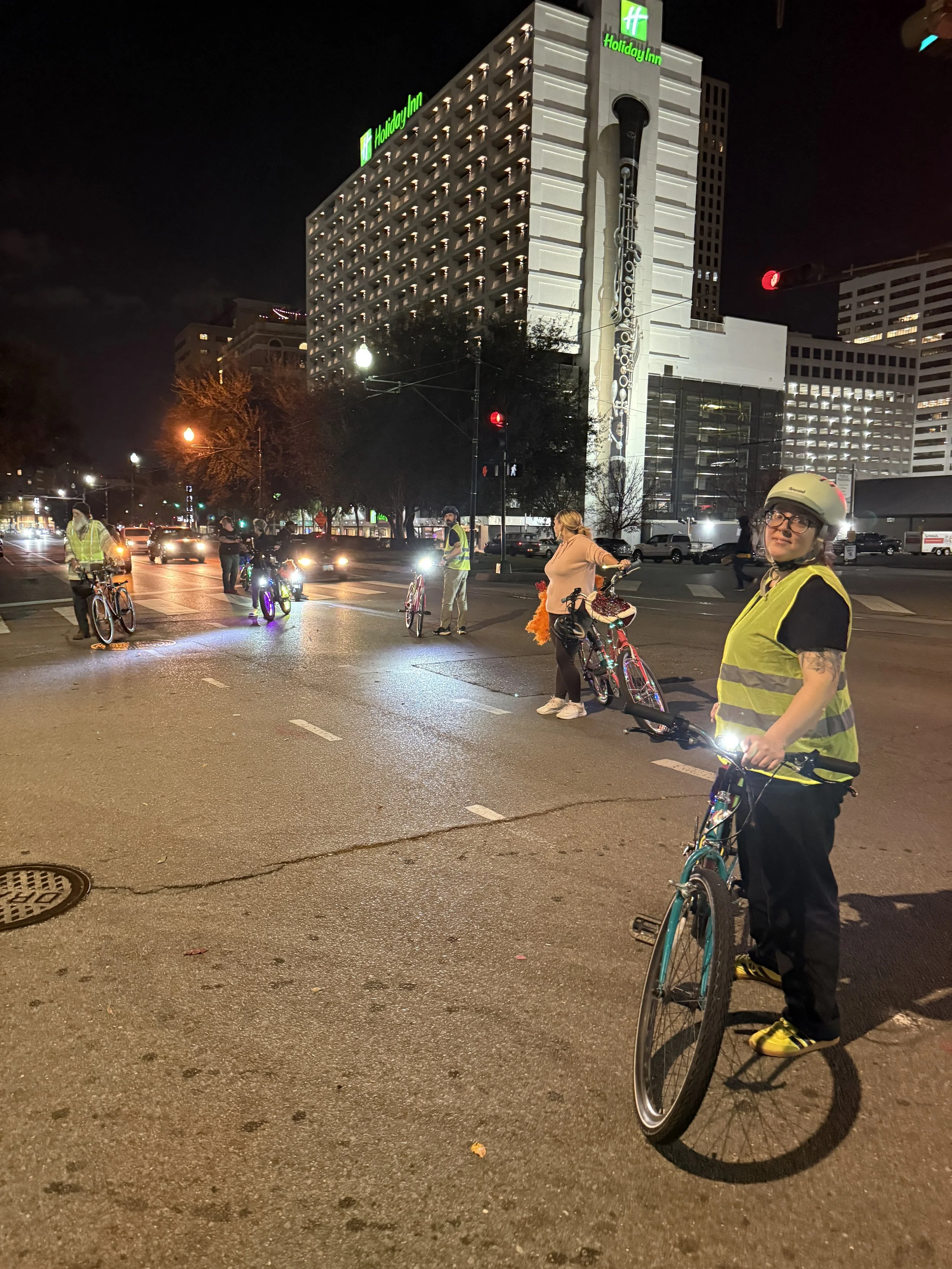
Critical Mass Nola corking the streets for the posada.
In the Hebrew Bible, the prophet Jeremiah, speaking to the monarchy (the government), gave the clearest description of what it means to be in the right relation with a Higher Power. He stated to King Jehoiakim, “Does it make you a king to have more and more cedar? Did not your father have food and drink? He did what was right and just, so all went well with him. He defended the cause of the poor and needy, and so all went well. Is that not what it means to know me?” declares the Lord. “But your eyes and your heart are set only on dishonest gain, on shedding innocent blood and on oppression and extortion” (Jeremiah 22:13-17). These words echo through the ages, speaking truth to Trump, the Billionaire Class, Wall Street, and their modern campaign of aggression against Venezuela via Operation Southern Spear.
Furthermore, many spiritual celebrations associated with the holidays recall historical responses to imperial oppression. Hanukkah remembers a time when Jewish communities in Judea lived under the rule of the Seleucid Empire. The empire tried to control daily life by banning Jewish religious practices and forcing people to adopt imperial customs. In response, Jewish communities organized and resisted this oppression, fighting to defend their way of life and their right to practice their faith. After reclaiming the Temple in Jerusalem, they found only a small amount of oil left to light the Menorah. According to the tradition, that oil burned for eight days instead of one. Each night of Hanukkah, candles are lit to remember this act of resistance and survival—a reminder that even under empire and repression, communities can endure, resist, and keep their light alive.
Christmas, too, reflects on the origins of Jesus’ resistance to empire. According to the New Testament, Jesus was born in a stable—an expression of solidarity with the marginalized. After receiving word from the Magi that Jesus may have been a messianic figure, Roman collaborators sought to eliminate him and committed genocide against all male babies in the area surrounding Bethlehem. Mary, Joseph, and Jesus were displaced by the violence of empire. As a result, they migrated to Egypt as refugees.
Critical Mass Nola and other bicyclist of good will creating a protective barrier for the Posada on Canal Street.
As a young man, Jesus’ experiences of displacement, oppression, and marginalization would have a formative impact on his consciousness. He initiated a social movement that directly confronted the material and social structures of the Roman Empire, articulating an alternative vision he called the “Kingdom of God.” From a historical-materialist perspective, this “Kingdom” was not a metaphysical abstraction, but a call for a new social system grounded in economic justice, communal solidarity, and resistance to the exploitation and domination imposed by imperial power. The movement’s challenge to existing class relations and state authority ultimately provoked repression, culminating in his execution—a clear example of how ruling powers enforce social hierarchies through violence when faced with organized resistance.
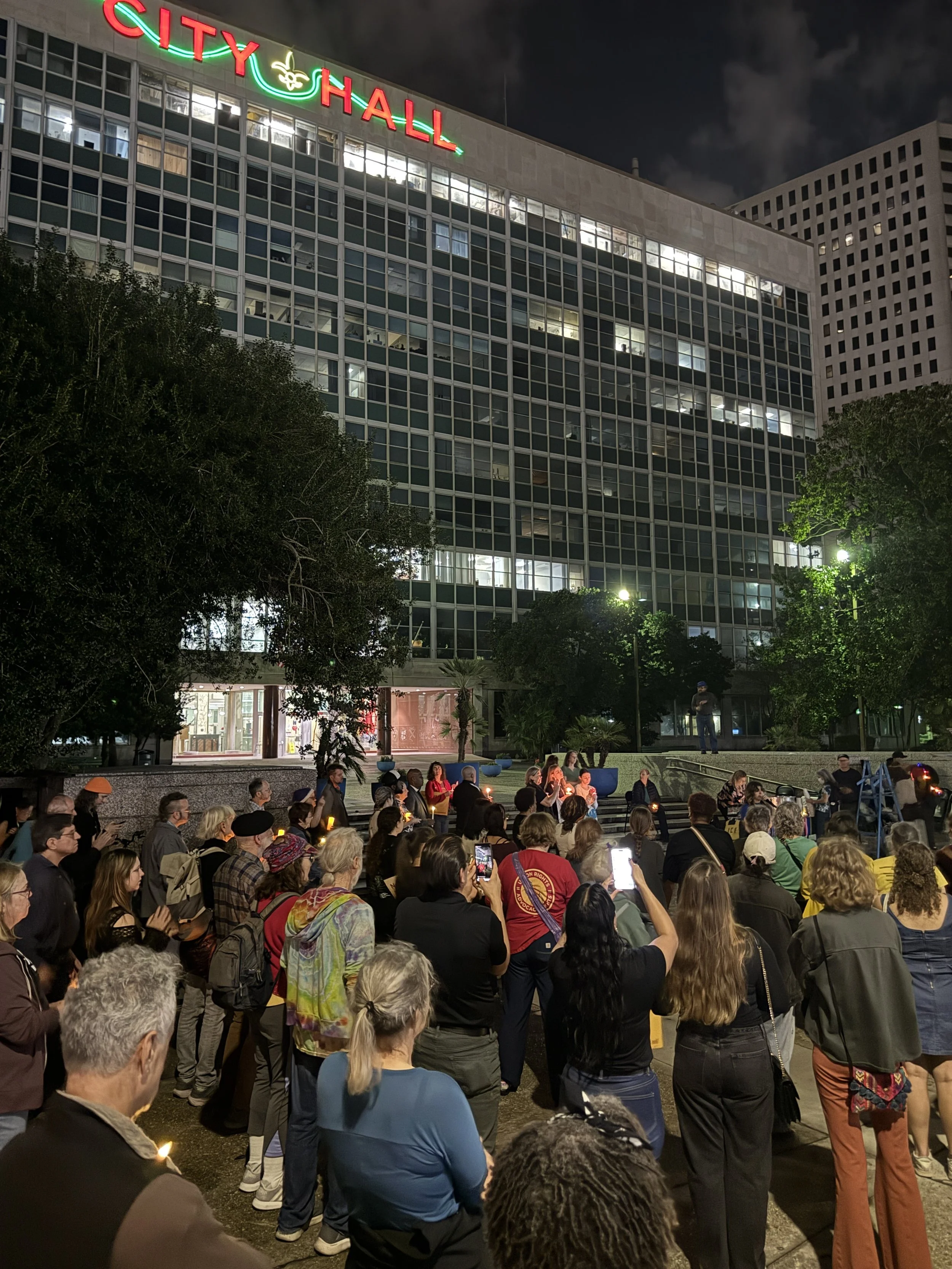
With this reflection, Critical Mass Nola participated in a Posada (Christmas procession) last night along with Union Migrante, Nola Nurses United, Unite Here Local 23, and United Teachers of New Orleans (American Federation of Teachers Local 527). This Posada itself was rooted in the struggle for human dignity and workers’ rights. As border patrol terrorizes working-class communities—enabled by a Supreme Court decision allowing racial profiling and the deportation of workers whom our very own governor and president exploit for profit—we decry our tax dollars being used in this manner. We also stood in solidarity with local labor unions that are organizing workplaces, negotiating contracts with union busters, and advancing workers’ rights to fair wages, benefits, and a voice on the job.
Ultimately, Critical Mass Nola recognizes that all of our struggles are interconnected. We work to expose the misappropriation of our tax dollars for urban planning shaped by decades of lobbying from the fossil fuel and auto industries that center our tax dollars on their profit. Complete streets with ADA-compliant sidewalks, extended crosswalks for pedestrians, separated bike lanes for bicyclists, and a robust and reliable public transit system are directly tied to the work of environmental organizations, labor unions, and groups fighting mass incarceration. It will take a united front to turn the tide against the bulwark of fascist-capitalist oppression and exploitation in New Orleans and across the country.
The beginning of challenging these structures of oppression is organizing a general strike with demands for complete streets, universal health care, union recognition for all workers, public and democratically controlled utilities, a well-funded public education system, and an overall economy planned by the people and for the health of the planet—not for a handful of billionaires and quarterly profits.
May the holiday traditions evoke memories of resistance and compel us to organize a new society grounded in socio-economic justice.
Happy Holidays!
Eric Gabourel