The War for Oil, From Louisiana to Venezuela
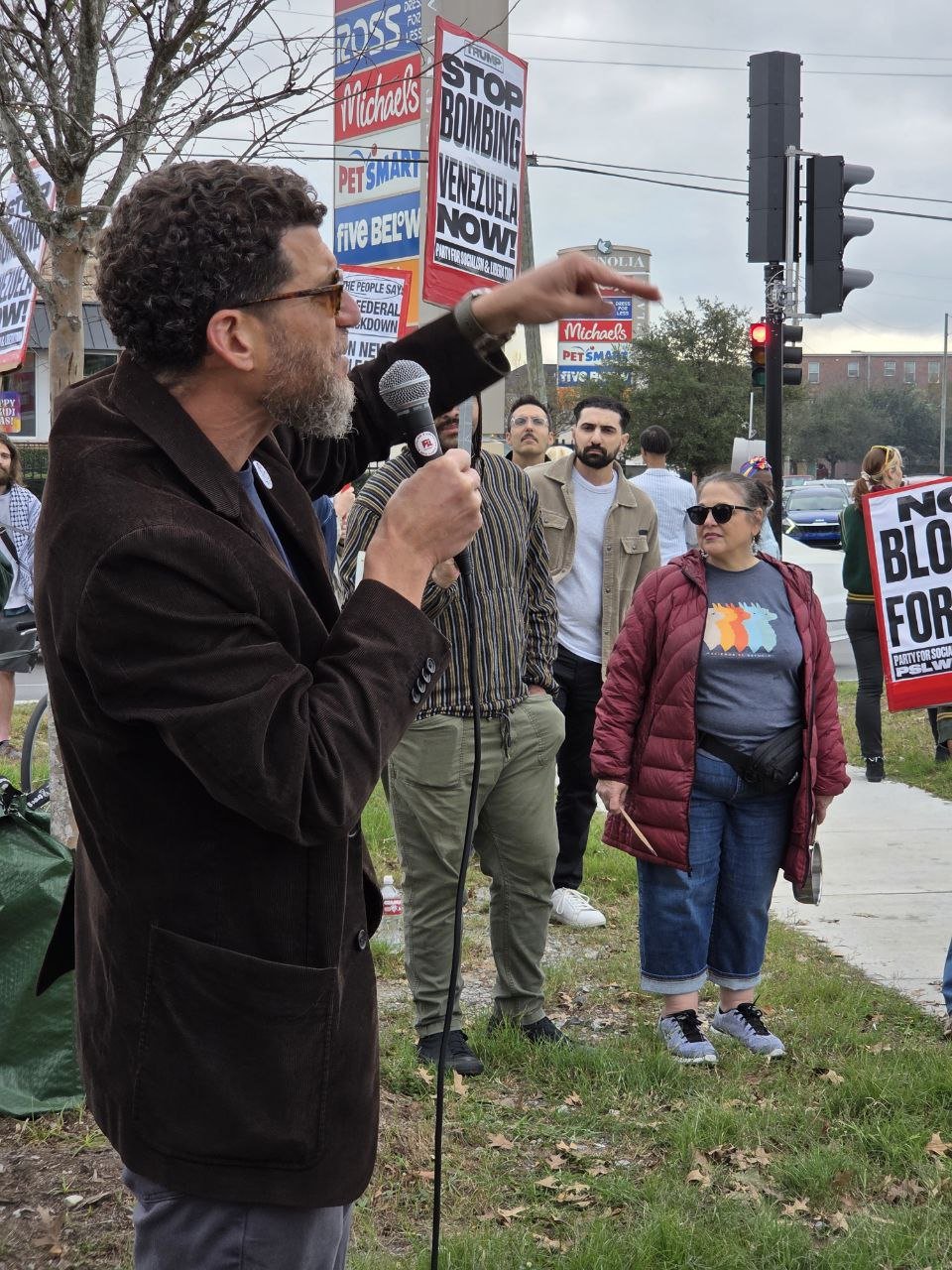
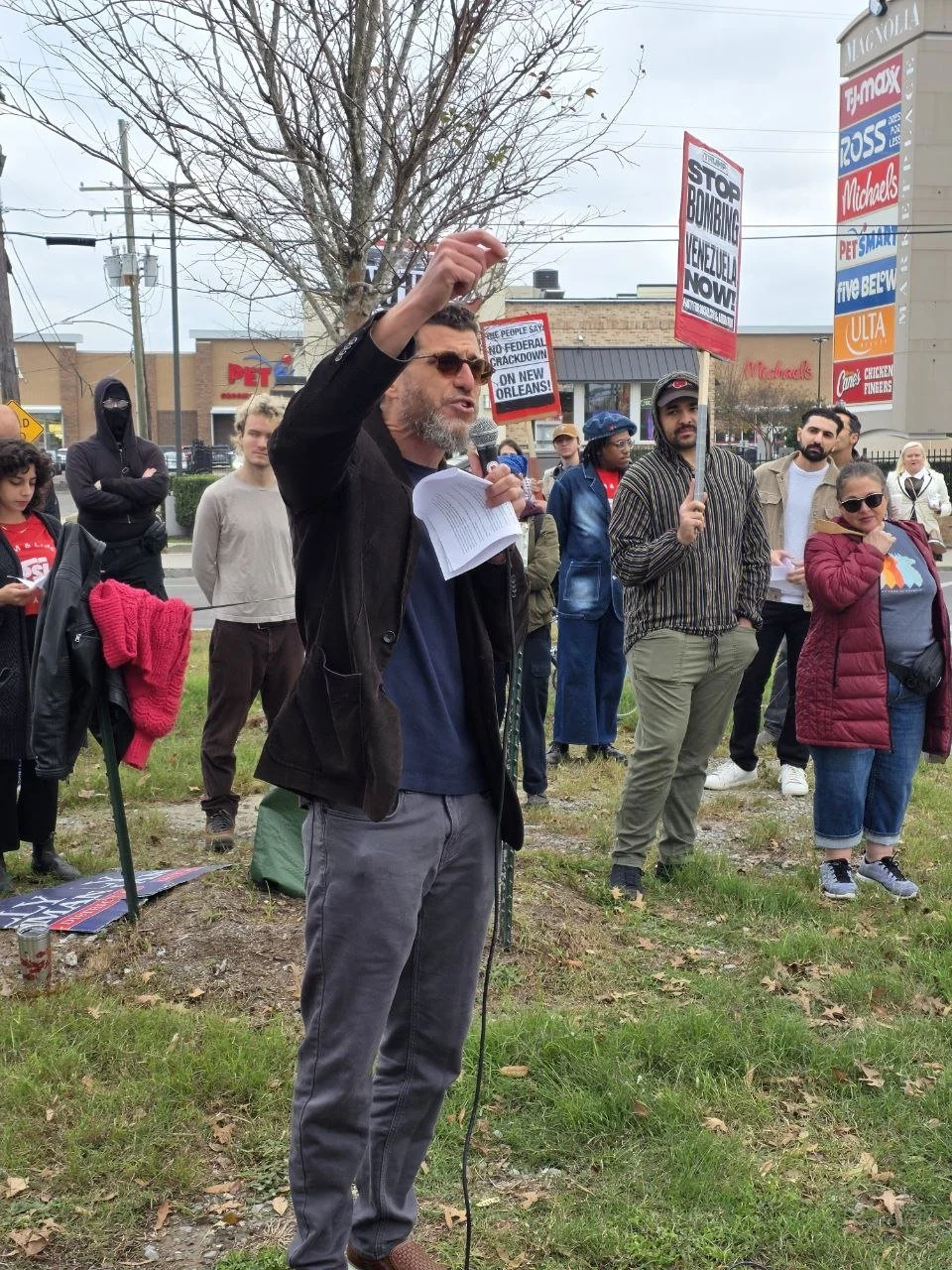
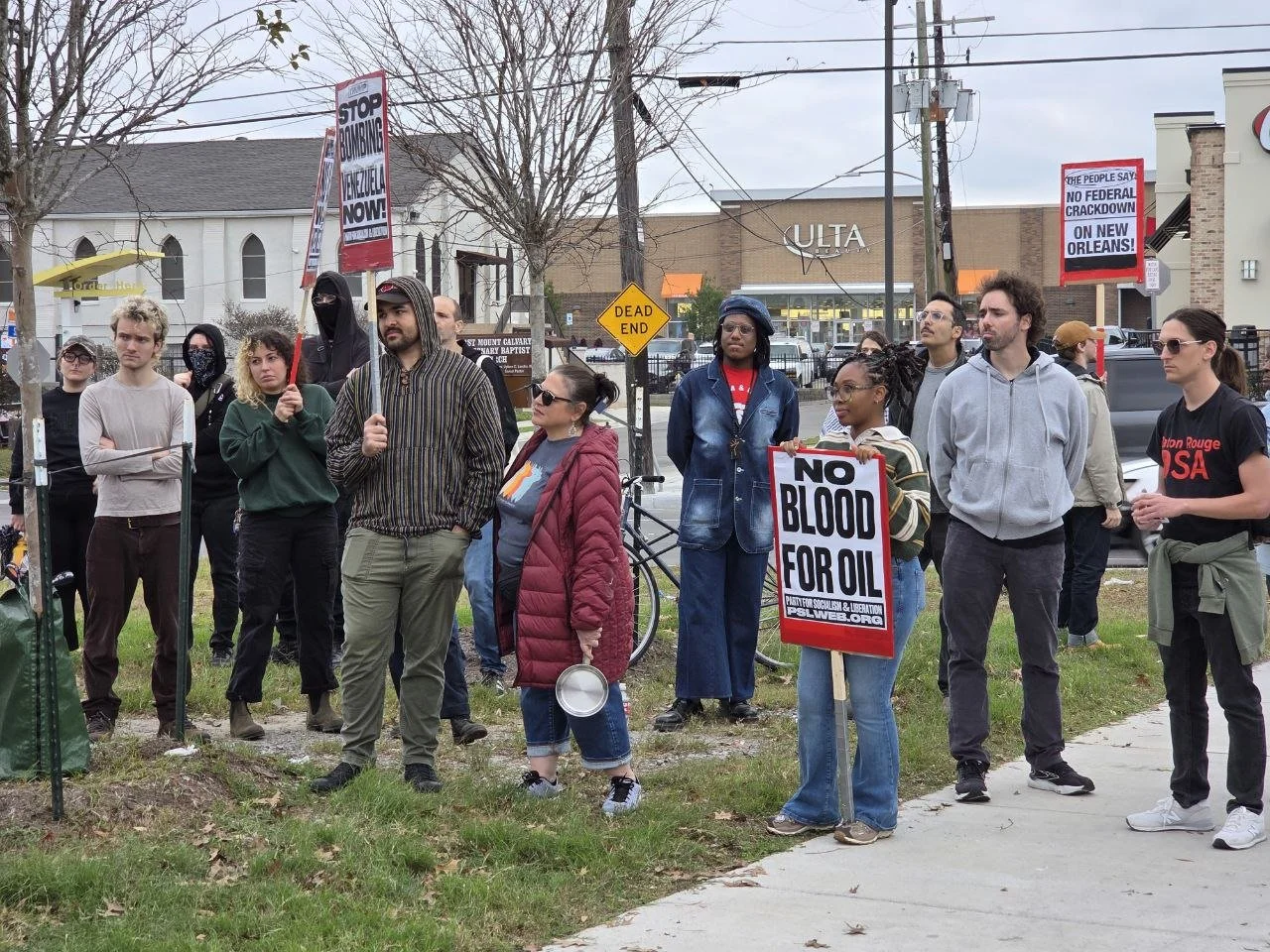
Critical Mass Nola organizer Eric Gabourel speaking at a protest organized by the PSL in opposition to U.S. aggression in Venezuela. Read PSL’s official statement against the war on Venezuela here.
The events unfolding in Venezuela is not abstract—and it’s not far away. This is not foreign policy. This is not a misunderstanding. This is a war for oil. And it runs straight from the refineries of Louisiana to the reserves of Venezuela.
Let’s tell the truth plainly. The U.S. government has no right to kidnap the president of another country. What we are witnessing is not diplomacy—it’s a crime. Stolen oil tankers, murdered fishermen, a naval blockade, an invasion. These are acts of war carried out in the open, not in defense of people, but in defense of profit.
Trump’s blockade of Venezuela is an act of war. Economic strangulation is still violence. And Trump admitted the motive himself: oil, land, and minerals. When politicians say Venezuela’s wealth must be “returned” to the United States, they are confessing to colonial theft. Returned—to who? To corporations that never owned it? To an empire that believes everything beneath the soil belongs to it?
This is piracy—organized piracy. The U.S. Navy is being used not to protect life, but to seize oil on the high seas—to enforce corporate control over energy with guns and warships. And we’ve heard the lies before. They say this war is about drugs. They invent cartels that don’t exist. Just like “weapons of mass destruction” in Iraq. When the truth won’t sell, imperialism manufactures an excuse. Lies are not mistakes—they are tools.
Why all this aggression? Because Venezuela has the largest proven oil reserves on Earth.
That oil used to be controlled by U.S. corporations. Through the Bolivarian Revolution, Venezuela took it back and said that oil would fund healthcare, education, housing, and social programs—not corporate shareholders. That was the crime. Not corruption. Not drugs. Not dictatorship. The crime was using national wealth for the people.
And this is why they say socialism doesn’t work. Socialism is not allowed to work.
Imperialism intervenes at every stage—sanctions, blockades, coup attempts, sabotage, military threats—then turns around and blames socialism for the wreckage it created. They put a knee on its neck and then ask why it can’t breathe. This is not failure. This is strangulation. And this violence follows a long, unapologetic tradition. It is rooted in the Monroe Doctrine—the declaration that Latin America is Washington’s backyard, its oil a resource to be claimed, its people expected to submit. Venezuela violated that rule. Venezuela said no. And empire does not forgive defiance.
We know this system well here in Louisiana.
From Cancer Alley to the Gulf Coast, oil dominates everything. Refineries, pipelines, export terminals, built not for our benefit—but for corporate profit. And this connection to Venezuela is not accidental. The oil Venezuela produces is heavy crude—oil that requires specialized refining equipment. Most refineries can’t process it. But the refineries along the Gulf Coast were designed specifically to handle this kind of crude. That is why Louisiana matters in this war. Our region is physically built into the machinery of imperial extraction.
And that control doesn’t stop at the refinery gates—it reaches into the very streets of New Orleans. The oil industry has shaped urban planning here for decades. It destroyed the Black business district along North Claiborne with the I-10 overpass, it designed streets for speed and fuel consumption, public space sacrificed for car dependency. This is not bad planning—it is class planning. Our city has been engineered to serve oil barons, not the people.
That is why resisting the oil industry is not only about opposing war abroad—it is about reclaiming our streets at home. Building an interconnected grid of separated bike lanes across New Orleans is a direct challenge to oil’s control over urban life. Every protected bike lane is a strike against forced car dependency. Every connected network is a refusal to organize our city around fossil fuel consumption. This is infrastructure for liberation, not profit.
Our communities choke on pollution while our streets are dangerous, broken, and neglected—because every dollar must serve oil or war. The same system that demands oil from Venezuela is the system that denies us safe streets at home. Instead of investing in bicycle infrastructure, public transit, and people-centered transportation—things that reduce oil dependence and save lives—the government pours money into warships and aircraft carriers. The USS Gerald Ford alone cost over $17 billion. That’s not defense, that’s enforcement—for oil executives.
Imagine what that money could build—safe streets, protected bike networks—real freedom of movement. But that future threatens the fossil fuel economy, so the war continues. And don’t be fooled—this didn’t start with Trump. Democrats and Republicans have worked together for decades. Different language, same objective: Sanctions, coups, destabilization. Excuses that change, while the target stays the same—control the oil.
If this escalates into full invasion, it won’t be the sons and daughters of CEOs who are sent to fight. It will be working-class people—used as cannon fodder so corporations can own what was never theirs. So we say no—not quietly, not politely. No to wars for oil. No to blockades and piracy. No to imperialism that sabotages socialism and then declares it impossible.
A world organized around people instead of profit is not a dream—it is a threat to empire. And that is why Venezuela is under attack.
And that is why we resist!
-Eric Gabourel