Casting the Oil Industry Off Our Backs: St. Claude Ave., Petro-Profits, and Imperialism
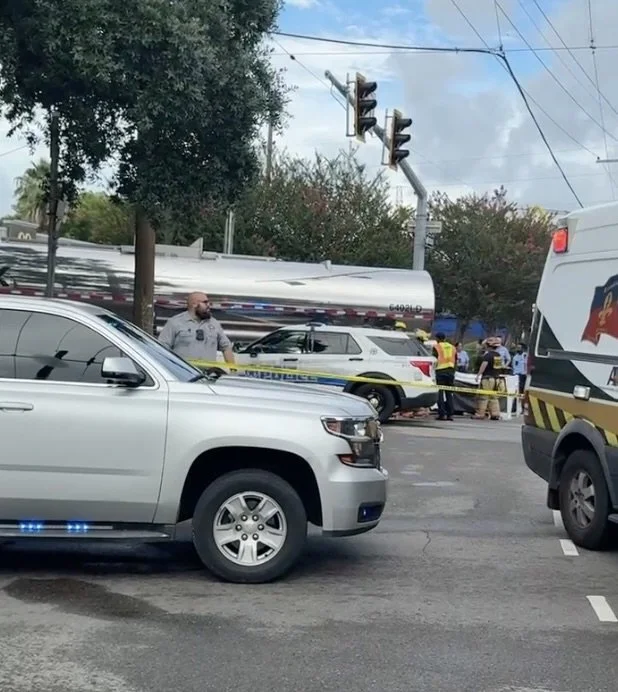
The Oil Tanker That Killed Miron Lockett on July 24th, 2025.
One evening, a comrade called me and told me that a bicyclist had been hit on St. Claude Avenue. I was on my way home, so I biked toward the scene, which was in the direction of my commute. When I arrived, I found the body of Miron Lockett pinned beneath the rear wheels of an oil tanker. The sight was unnerving. It was also unmistakably symbolic. For decades, the oil industry has been on our backs—crushing communities, poisoning land and water, and creating cancer alleys in southern Louisiana. That night, on St. Claude, that violence was made horrifyingly literal.
St. Claude is not a highway. It is a dense corridor of homes, schools, restaurants, bars, music venues, galleries, and community life. Yet it is engineered as a petro-artery—wide lanes, high speeds, and constant heavy truck traffic—because oil logistics are prioritized over human safety. This is why we are organizing for a physically separated bike lane on St. Claude Avenue. A dedicated, separated bike lane with extended crosswalks would slow traffic, reduce truck dominance, anchor safe pedestrian crossings, and reorient the street around people rather than petro-commerce. It would literally save lives. However, the influence of oil on the planning of our cities, our economy, and U.S. foreign policy is pervasive and deeply entrenched.
Through decades of lobbying—criminalizing jaywalking, dismantling streetcar systems, replacing them with buses to force cities to buy oil, and purchasing representatives at the federal, state, and city levels—the oil industry has shaped our built environment and political system. Our elected officials do not represent the working class. They represent the oil industry and a billionaire oligarchy.
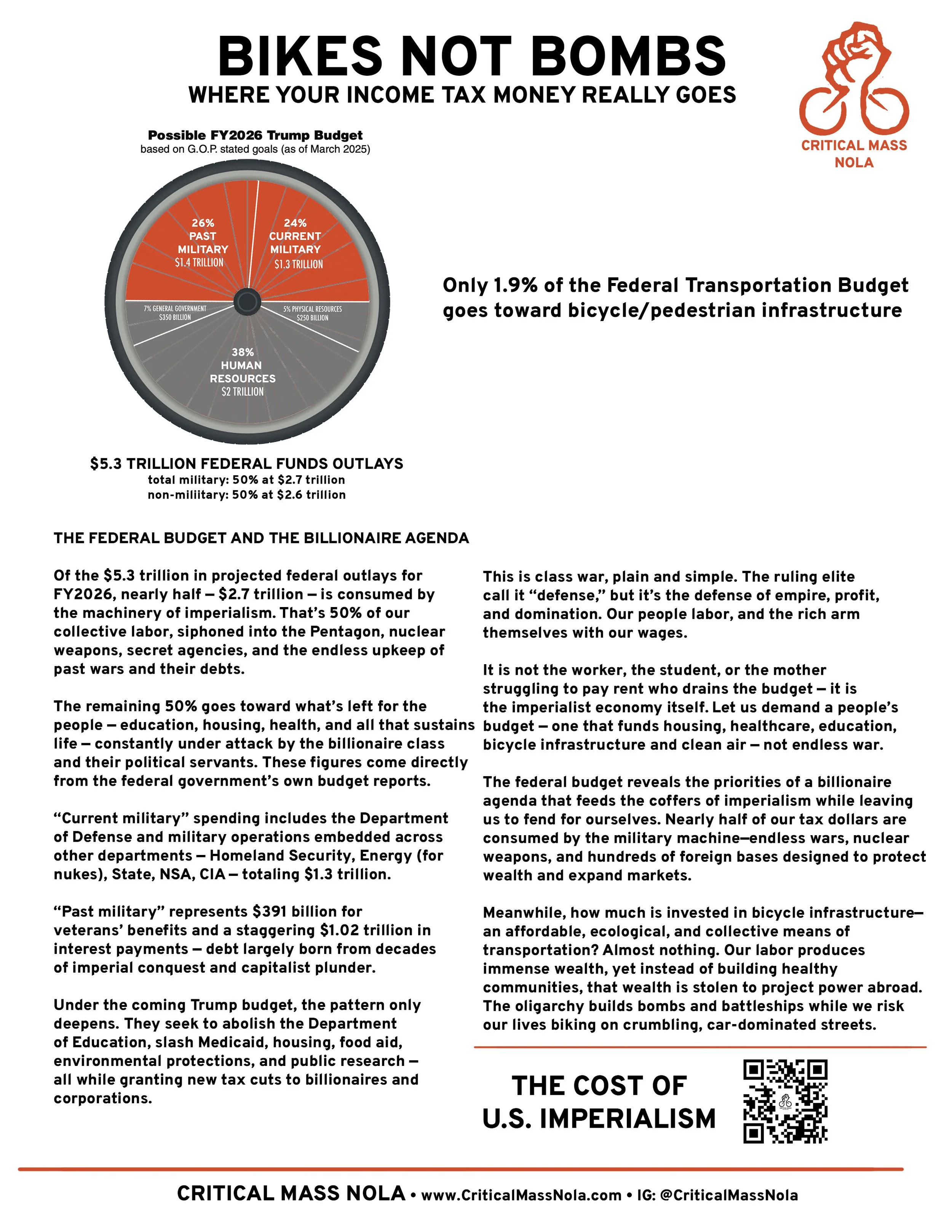
The QR code takes you here.
Roughly half of our federal income tax dollars are funneled into the Department of Defense—the single largest institutional polluter on Earth. The global reach of U.S. military power is sustained by oil, accumulated through coercion, sanctions, and the strategic control of other nations’ reserves. This is not abstract geopolitics; it is materially tied to Louisiana.
Venezuela, which has the largest oil reserves on Earth, possesses some of the world’s heaviest crude, which can only be refined by a small number of specialized refineries—many of them located along Louisiana’s Gulf Coast. The U.S.-backed coup efforts, naval blockade, and seizure of Venezuelan oil vessels are therefore not merely ideological exercises in empire, but concrete attempts to secure feedstock for Louisiana’s refining infrastructure. In this sense, militarism abroad and petrochemical power at home are two expressions of the same system.
Oil’s influence extends even into our cultural life. Chevron sponsors French Quarter Fest. Shell sponsors Jazz Fest. The Helis Foundation is a major patron of the arts in New Orleans. Oil has seeped into every facet of daily life, laundering its image through culture, celebration, and philanthropy.
We already possess the technology to stop extracting oil and to transition to renewable energy. These technologies could mitigate climate change, prevent ecological collapse, and make our streets safer. But renewables do not generate the insatiable quarterly profits demanded by an economy based not on cooperation, but on profit. As a result, technologies that could save the planet and protect human life remain deliberately sidelined.
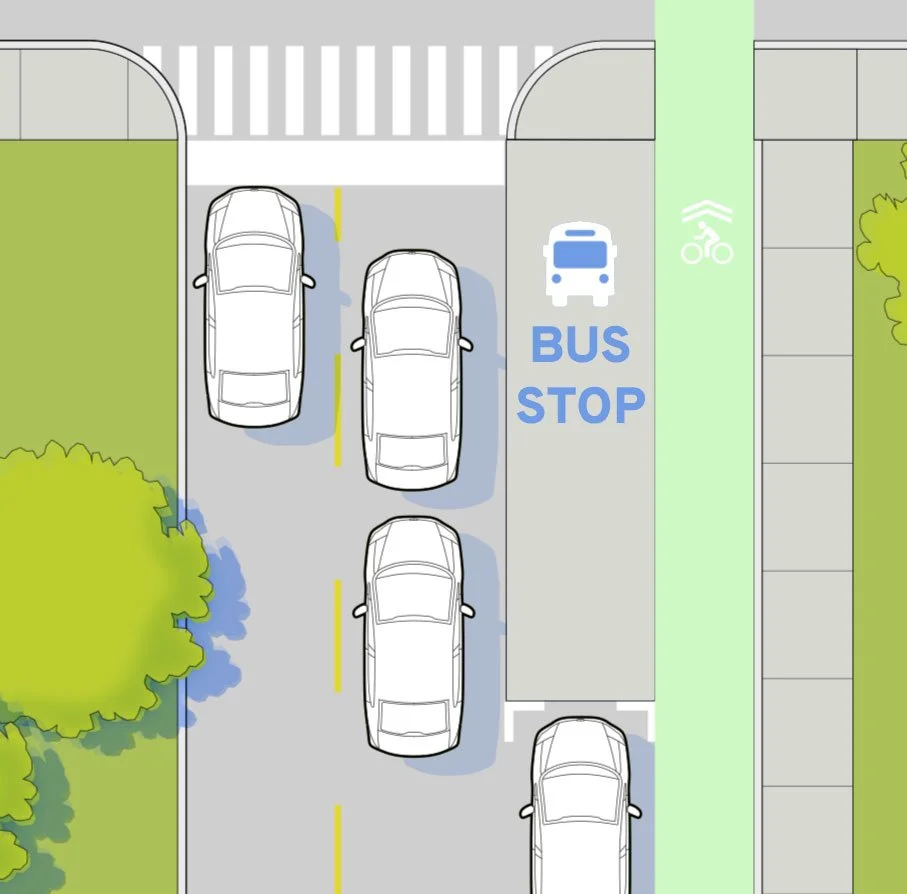
Please sign our petition for a seperated bike lane on St. Claude Ave here.
The only solution is to organize grassroots power and build a democratic centralist, collective form of control over our streets and our economy. If the working class had real power over urban planning, we would have had protected bike lanes, extended crosswalks, ADA-compliant sidewalks, and robust and reliable public transit long ago.
We don’t—because we don’t have a voice. We have been trained to believe that simply voting for new leaders will produce change. But the profit-driven system cannot be transformed by candidates who are, from the outset, bought and paid for by oil oligarchs. What we need is a democratic centralized system in which delegates to City Hall, state legislatures, and Congress are accountable directly to the people—reporting and executing the will of the majority, not ruling over it. Otherwise, representatives will always bend the knee to the corporate giants who dominate the political process.
Let the life and death of Miron Lockett inspire us to organize and to get the oil industry that is devastating the environment and our communities off our backs. Let us therefore commit ourselves to organizing, staying the course, and building a democratic centralist reality in which our voices and votes directly shape our infrastructure and economy—creating streets designed for people, not fossil fuels and profit.
Another world is possible!
-Eric Gabourel
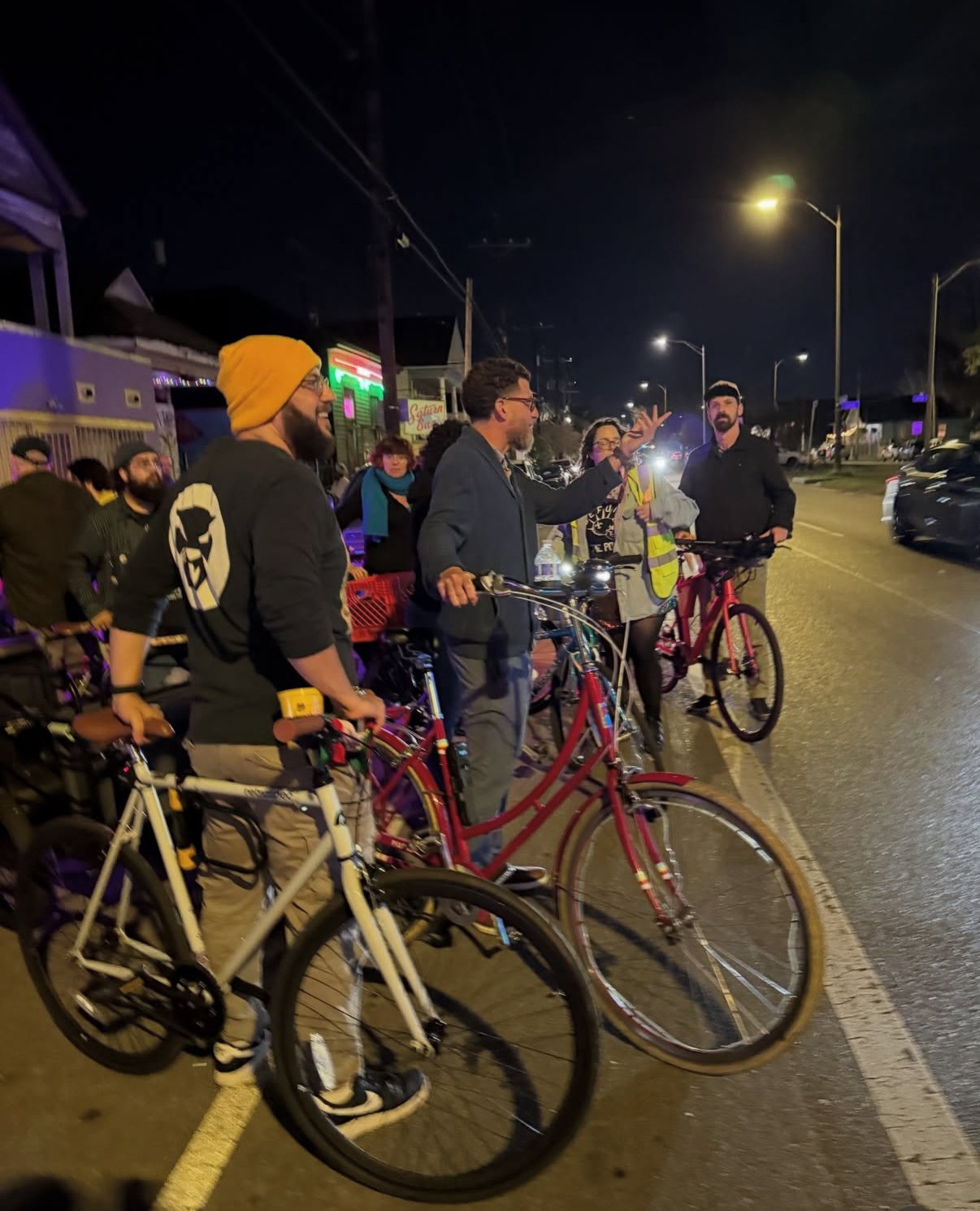
Critical Mass Nola setting out to lead a ride at Spark: Light Up St. Claude.