Beyond the Data Center Ban: Power, Capital, and New Orleans East
Why the PSL Still Had a Town Hall in New Orleans East
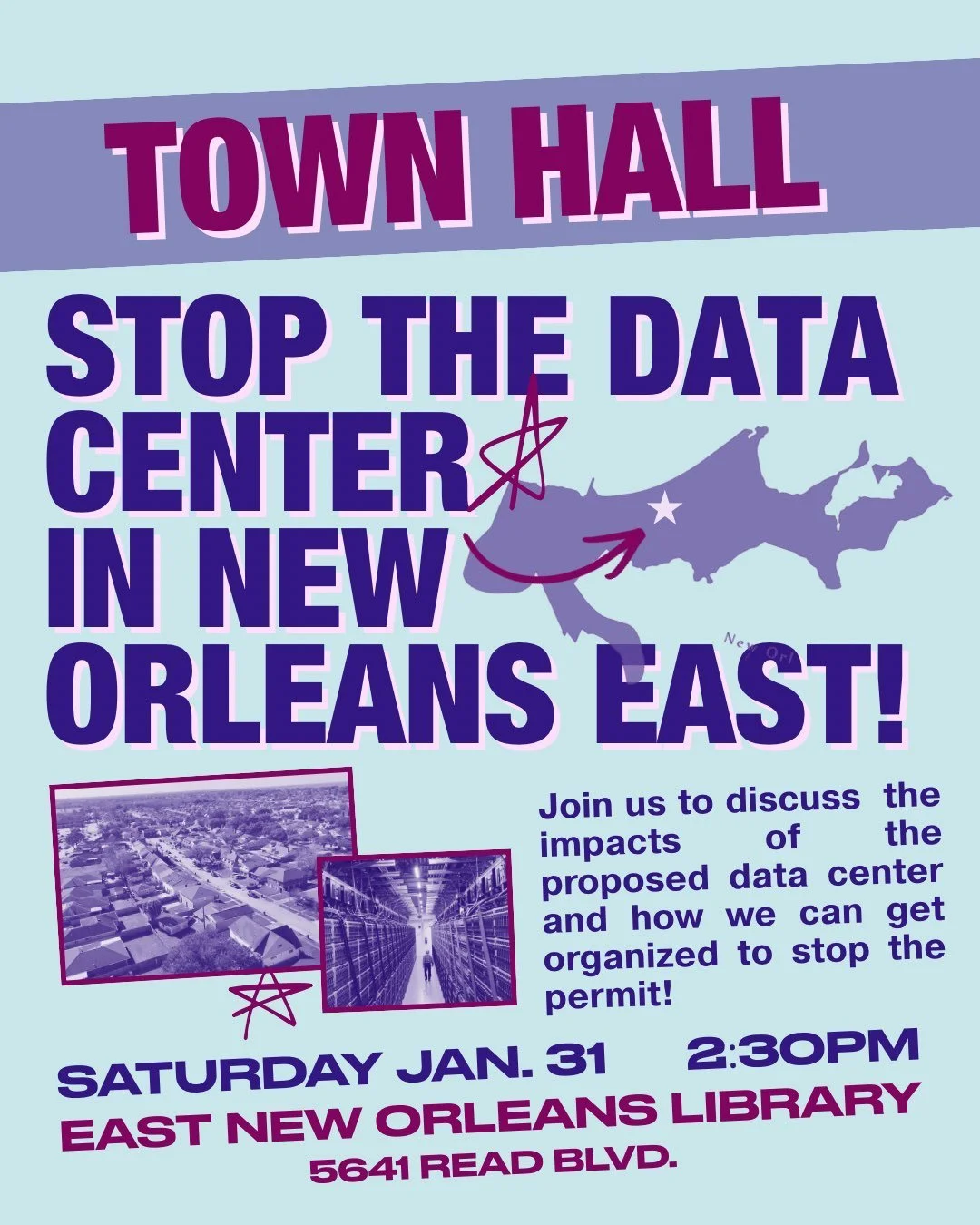
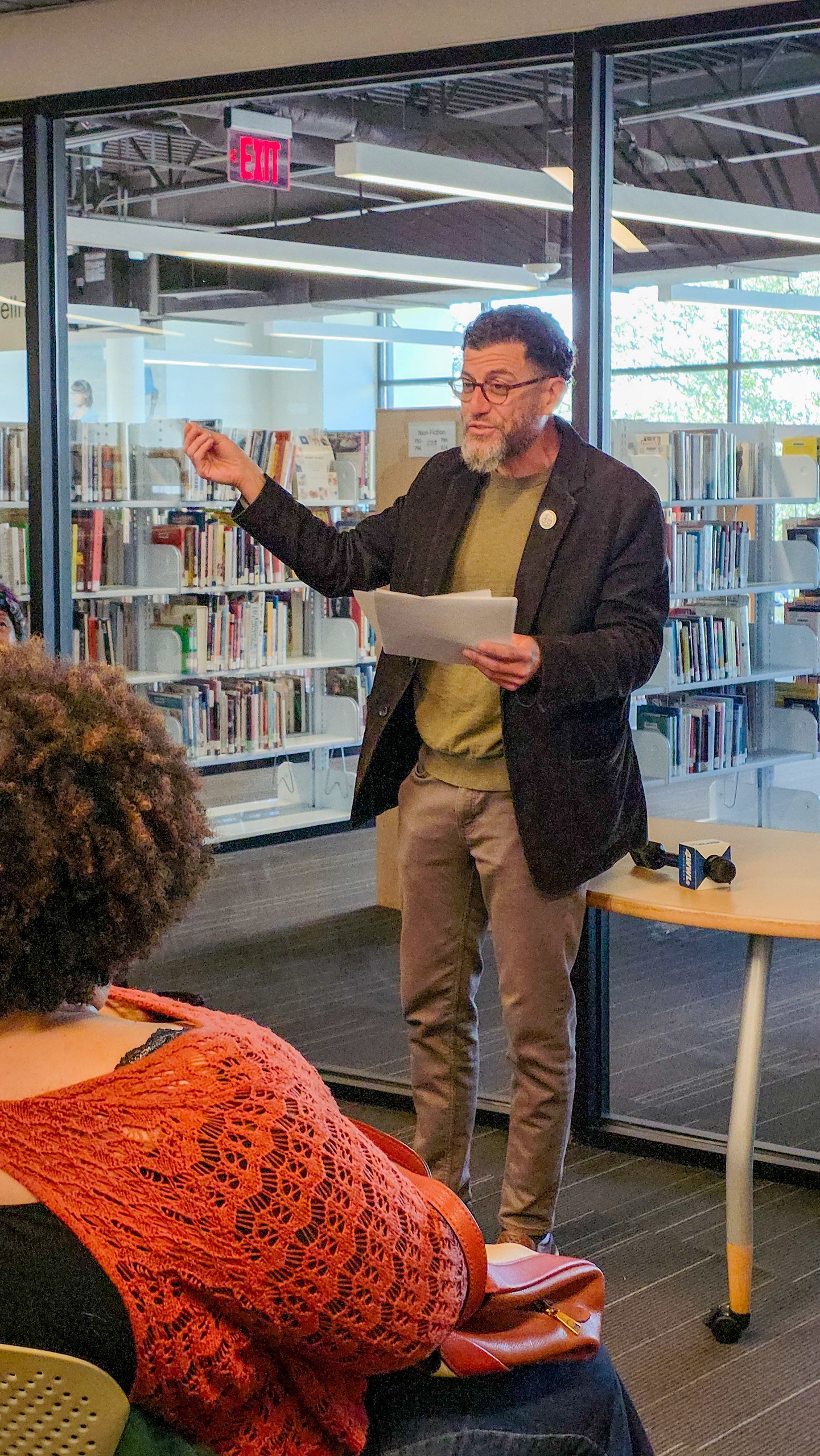
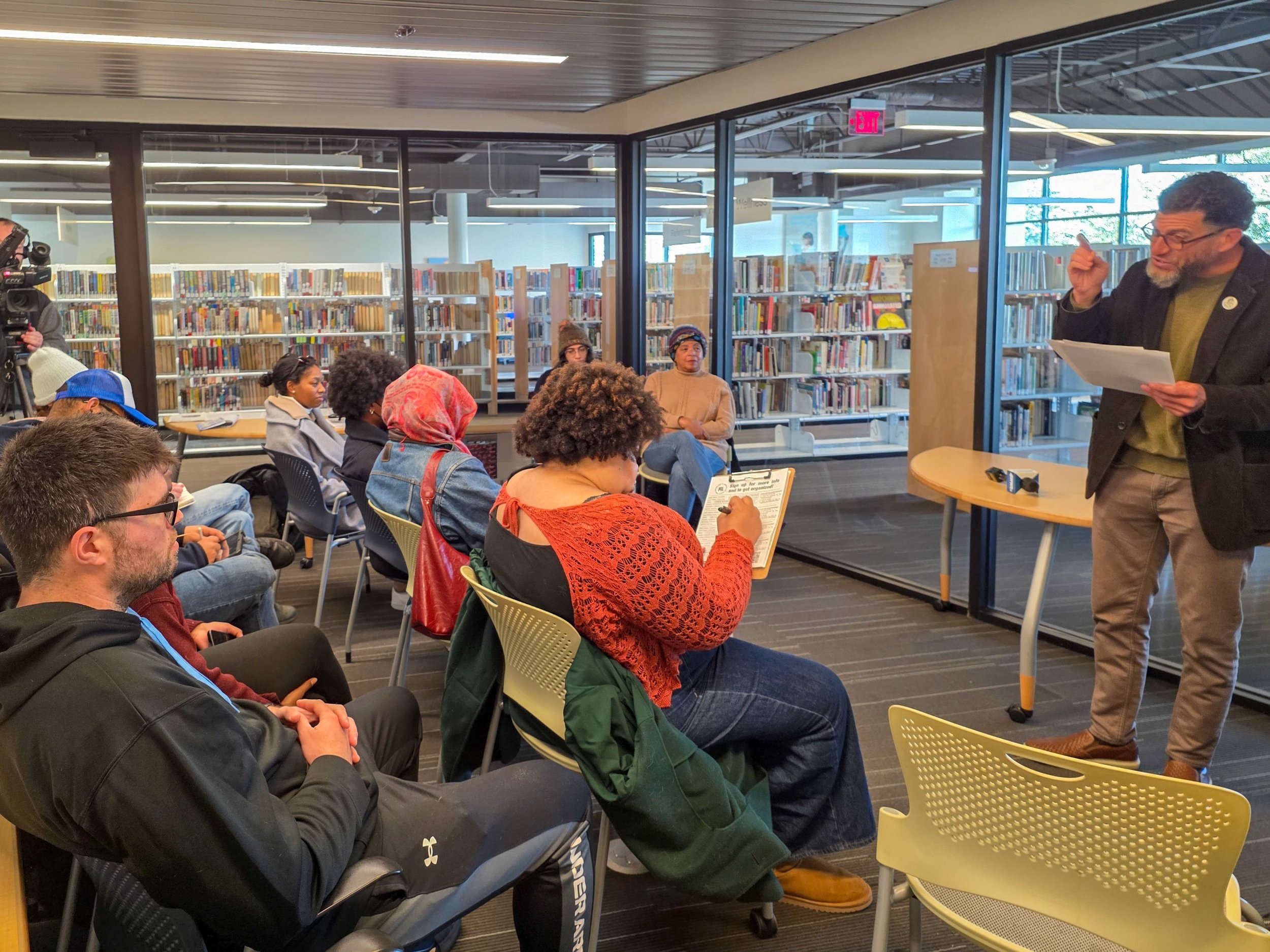
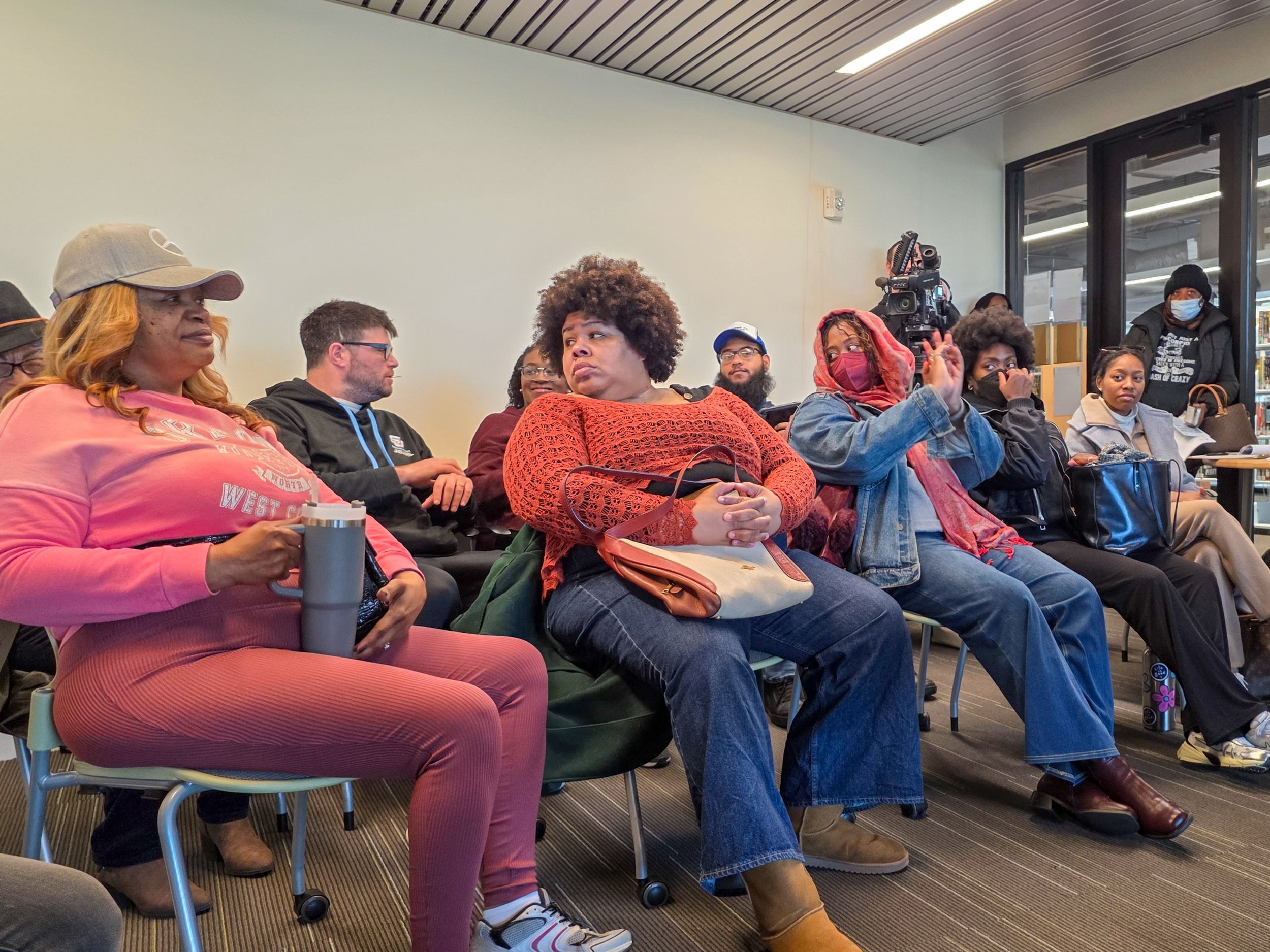
On Saturday January 31st, the Party for Socialism and Liberation (PSL) held a town hall in New Orleans East. PSL is a U.S. socialist political party with branches all over the country, fighting for an economy planned for the people and the planet—not for corporate profit. The purpose of this meeting wasn’t abstract theory. It was grounded, urgent, and local—to collectively analyze the “ban” on the proposed data center development in New Orleans East and to situate it within the broader political and economic forces shaping our city.
What became immediately clear is that this is not just a neighborhood issue, nor merely a zoning dispute. It is part of a national—and global—pattern driven by capitalism’s relentless pursuit of profit.
Data Centers, AI, and a Socialist Analysis of the Moment
Across the country, the largest tech corporations are pouring billions of dollars into artificial intelligence data center infrastructure. The United States already accounts for nearly 40% of global data center capacity, and that share is growing rapidly. These so-called “hyperscale” facilities are not being built to serve local communities or meet human needs. They exist to power the most energy-intensive AI systems ever created—systems designed primarily to secure market dominance and extract future profits.
Under socialism, this would look completely different. Researchers would share information instead of hoarding it behind paywalls and patents. Technology would be developed according to a democratic plan—to benefit people, protect the planet, and actually solve social problems.
Under capitalism, however, tech giants are locked in reckless competition. This AI arms race is wasteful, redundant, and chaotic. The massive build-out of data centers far exceeds what is actually needed, even as there are clear and available ways to dramatically reduce energy use right now. Instead of pursuing efficiency or sustainability, corporations race to crowd out competitors in anticipation of future profits. This is classic capitalist overproduction. And with AI now at the center of capitalist development, the consequences are enormous.
This is not simply a technical issue. It is a political issue, a class issue, and an environmental justice issue.
The Proposed Data Center in New Orleans East—What Actually Happened
In November, residents of New Orleans East received a letter from a company called MS Solar Grid Data. The letter informed them that a data center would be built on two lots at the intersection of I-10 and Read Boulevard. With only 16 days’ notice, residents were invited to a meeting to provide “feedback.” To move forward, the project would have required a zoning change from residential to commercial—something that must pass through the city.
On January 20th, WWL published a story featuring interviews with concerned residents who strongly opposed placing a data center in the middle of a residential neighborhood. City leadership responded with alarm. Mayor Moreno stated she was unaware of the project until that week, a confusing claim given that residents had already been notified and City Council member Jason Hughes had publicly acknowledged the proposal nearly two months earlier.
At a special City Council meeting this past Wednesday, two motions related to data center policymaking were passed:
Motion 1: The City Planning Commission will create a new zoning classification to formally define data centers within the zoning code.
Motion 2: A temporary, one-year ban on new data center construction across the entire city.
Following that meeting, developer James Ramsey announced he was pulling the plug on the proposed data center in New Orleans East. At first glance, this might sound like a victory. But it’s not the end of the story.
Capitalism Is Relentless—And That’s Why We Must Organize
Let’s be clear about what this moment actually represents. The MS Solar Grid Data project will not move forward—for now. But this is not a structural win. A one-year pause is not democratic control. It is not community consent. It is not a guarantee of safety or justice.
An Interim Zoning District (IZD) is a temporary measure, typically lasting one year, used to pause specific types of development while the city studies or updates permanent zoning laws. In this case, it created time—time that exists only because residents organized, spoke out, and disrupted business as usual.
Capital doesn’t give up profits because it has a change of heart. When one site is blocked, it looks for another opening. Another zoning loophole. Another moment of political distraction. If resistance weakens, these projects return—rebranded, renamed, and rushed through. This is why we do not trust the “victory” narrative being pushed by local media. Headlines declaring the data center “dead” serve one purpose—to make people stop organizing. To make them believe the danger has passed.
But New Orleans East remains a target.
These facilities are overwhelmingly sited in Black, Latino, Native, rural, and working-class communities—places already dealing with pollution, flooding, blackouts, and chronic neglect. New Orleans East is not being developed. It is being positioned as expendable. This is environmental racism. It is part of a broader war on Black America, where disinvestment and exploitation coexist side by side.
We’re told these projects bring jobs—but data centers employ very few workers once built, while AI threatens to eliminate millions of jobs across the economy. At the same time, AI under capitalism is deeply tied to surveillance, policing, border enforcement, and repression. The same system building these data centers is funding imperialist wars, expanding ICE terror, and developing new tools to monitor and control working people.
That is why we are still organizing. That is why we are still meeting. And that is why this town hall mattered.
This moment is not about celebrating a win. It is about preparing for the next round. Because unless something fundamentally changes, capital will regroup—and it will come back. And when it does, we need to be ready.
Want more socialist analysis of the most pressing issues working class people are facing today? Join the PSL Action Network!
Another Word Is Possible!
— Eric Gabourel