Tracing MLK’s Steps in New Orleans.
International Longshoreman’s Association Union Hall (2700 S. Claiborne Ave.)
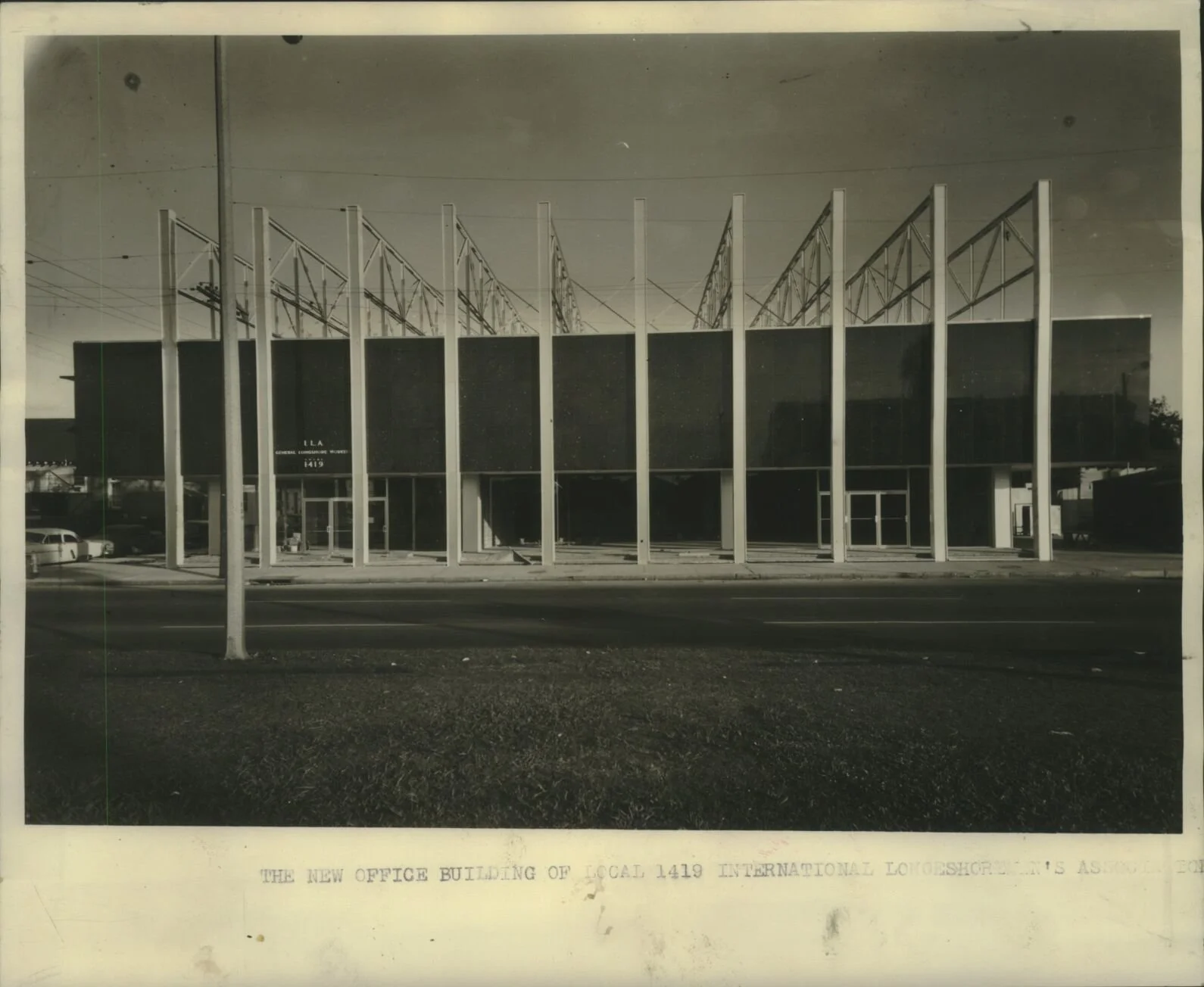
International Longshoreman’s Association Union Hall (2700 S. Claiborne Ave.)
Date: September 21, 1959.
Organized Labor and Resistance to economic exploitation
ILA Local 1419 At the International Longshoremen’s Association (ILA) Union Hall in New Orleans, Martin Luther King Jr. spoke about
the power of labor, the economics of discrimination, and the solidarity between the Civil Rights Movement and the labor movement, emphasizing how workers could gain power by fighting racism and forming interracial unions, calling unions "the first anti-poverty program" and a source of strength for civil rights struggles. He praised the ILA's support, saying, "We've learned from labor the meaning of power" and that he felt energized by their efforts.
Key Themes of His Speech:
Interracial Solidarity: King highlighted the importance of Black and white workers uniting, echoing the ILA's efforts to build interracial unions.
Economic Justice: He connected racial discrimination to economic exploitation, stressing that workers' rights and civil rights were intertwined.
Power of the Working Class: King recognized the longshoremen as a powerful force, capable of achieving significant change. His words foreshadowed his later focus on economic issues and anti-poverty efforts, culminating in his work with striking sanitation workers shortly before his death.
* New Orleans General Strike of 1892: In 1892, Black and white unionized dock workers in New Orleans formed a Triple Alliance among the Teamsters, Scalesmen, and Packers unions. While negotiating with the New Orleans Board of Trade, they agreed that their negotiating committee would be evenly split—50/50, with equal representation from Black and white workers—and that contracts would be distributed equally to Black and white laborers.
When the Board of Trade refused to negotiate with Black workers, the Triple Alliance responded by calling a general strike, shutting down the entire city for four days. This moment—known as the New Orleans General Strike of 1892—offered a powerful glimpse of what becomes possible when the mechanisms of racism used by the ruling class to divide workers are dismantled.
It shows us the power that solidarity can have.
Read more about the 1892 General Strike—and let’s continue the conversation about organizing a general strike again.
2. New Zion Baptist Church (3rd & LaSalle Streets)
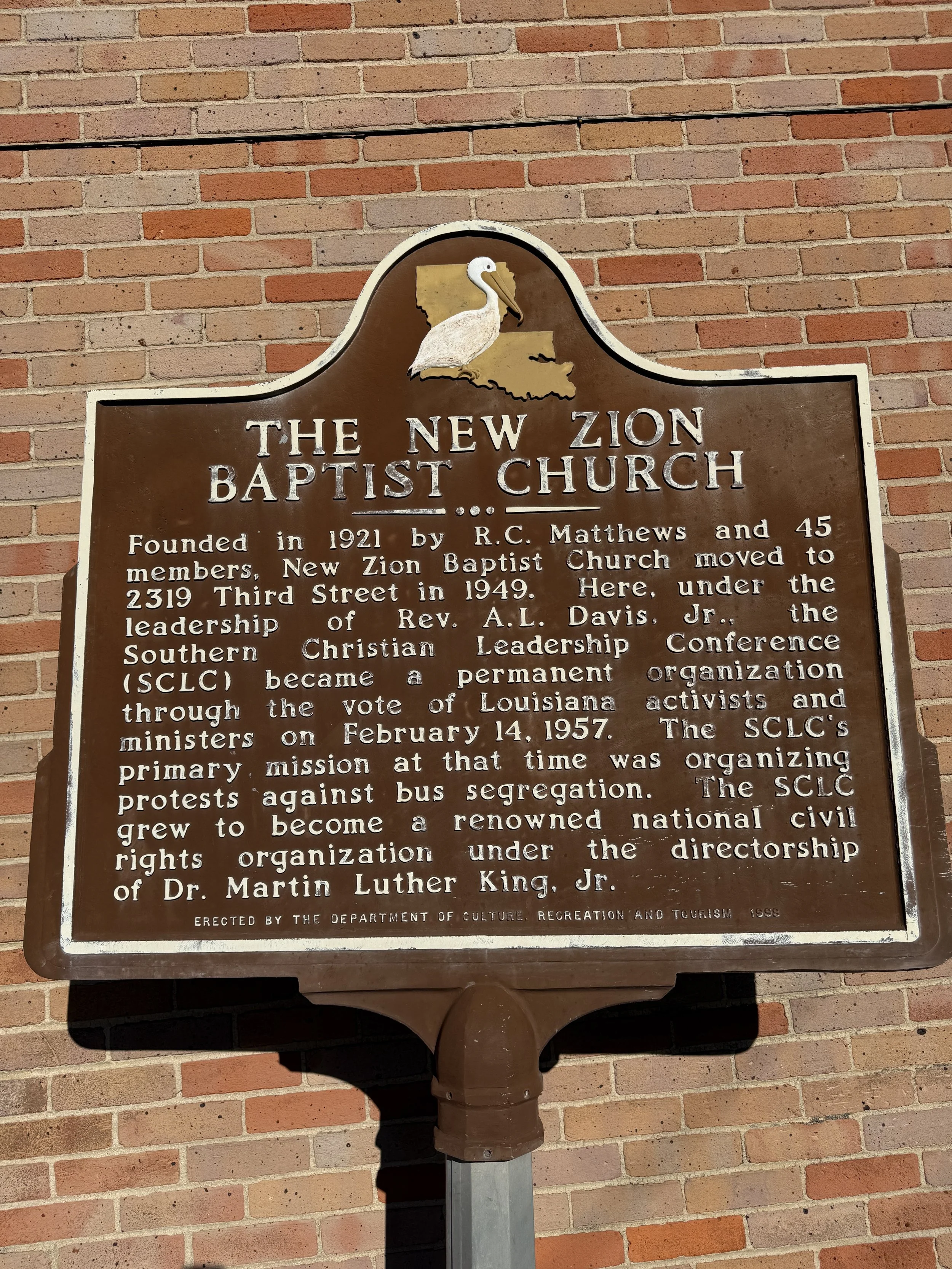
New Zion Baptist Church (3rd & LaSalle Streets)
Date: February 14, 1957
MLK elected as the president of the SCLC
In February 1957 MLK and other civil rights leaders formally established the Southern Christian Leadership Conference (SCLC) here, with King elected as its first president. He also spoke at the church during other visits, advocating for nonviolent protest and discussing the fight against segregation.
Key Events at New Zion Baptist Church:
Founding of the SCLC (February 14, 1957): King met with other Black ministers in Central City at New Zion Baptist Church to officially launch the SCLC, an organization to coordinate civil rights efforts.
Speeches on Desegregation: During these meetings, King famously called segregation "a great cancer in the body politic," urging dialogue and unity for integration.
3. Union Bethel A.M.E. Church (2321 Thalia St.)
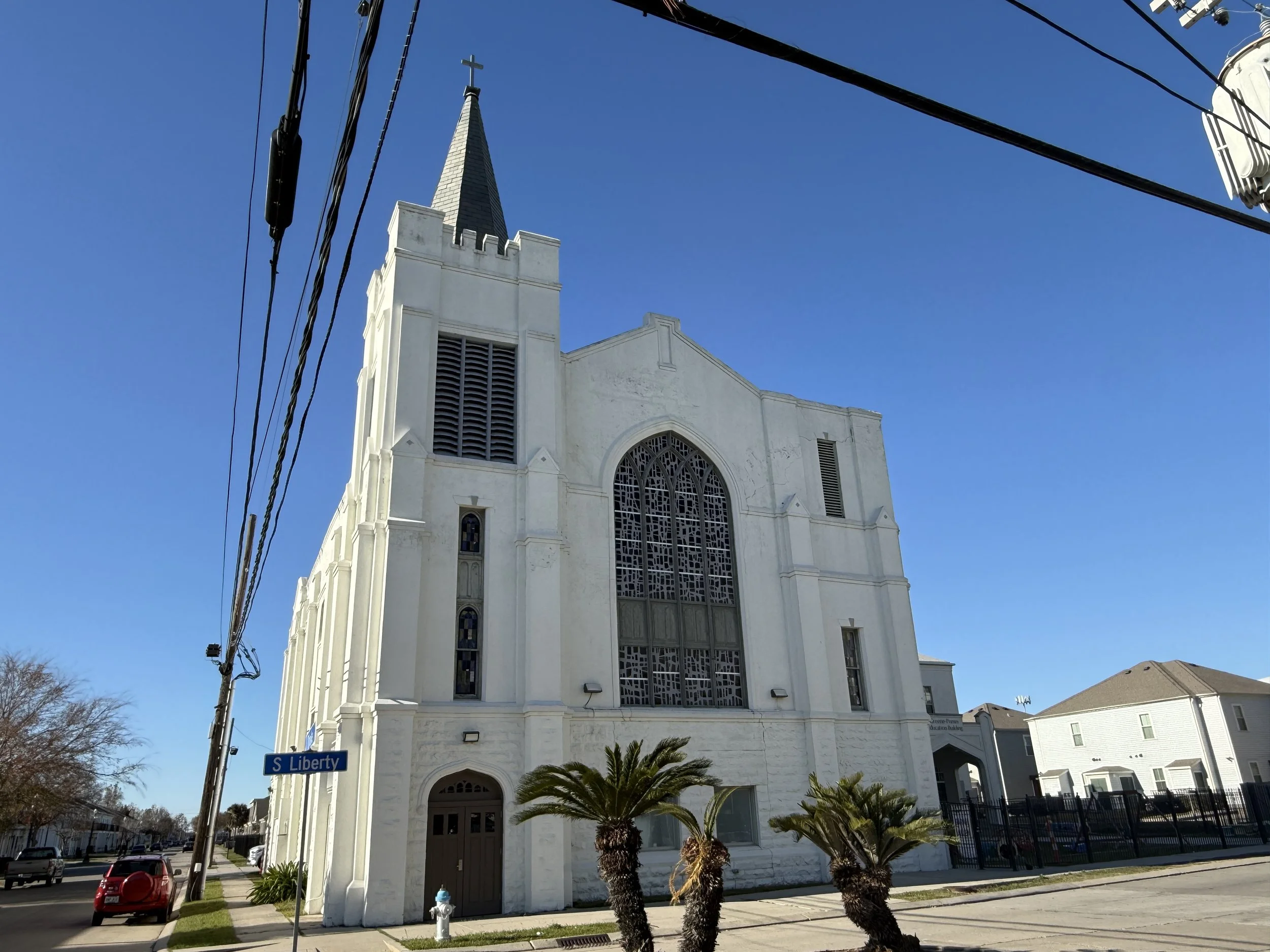
Union Bethel A.M.E. Church (2321 Thalia St.)
Date: December 1961
Declared the need for a New Emancipation Proclamation.
MLK spoke at the Union Bethel A.M.E. Church in New Orleans, after being denied the Municipal Auditorium, where he called for a "new emancipation proclamation" and urged the President to end segregation via the 14th Amendment. The church, under Rev. Lutrelle Grice Long, opened its doors, becoming a significant site for civil rights activities and a place where King rallied support.
Key Details:
Context: King was blocked from speaking at the Municipal Auditorium due to opposition from segregationists, prompting the move to Union Bethel.
Message: He used the platform to denounce segregation, calling it a moral stain and advocating for executive action to enforce desegregation.
Significance: Union Bethel became a vital space for the Civil Rights Movement in New Orleans, hosting King and other leaders, and holding numerous related activities.
Union Bethel A.M.E. Church remains a historic landmark, recognized for its role in the Civil Rights era and its connection to Dr. King's efforts in New Orleans.
4. Coliseum Arena (401 North Roman St.)
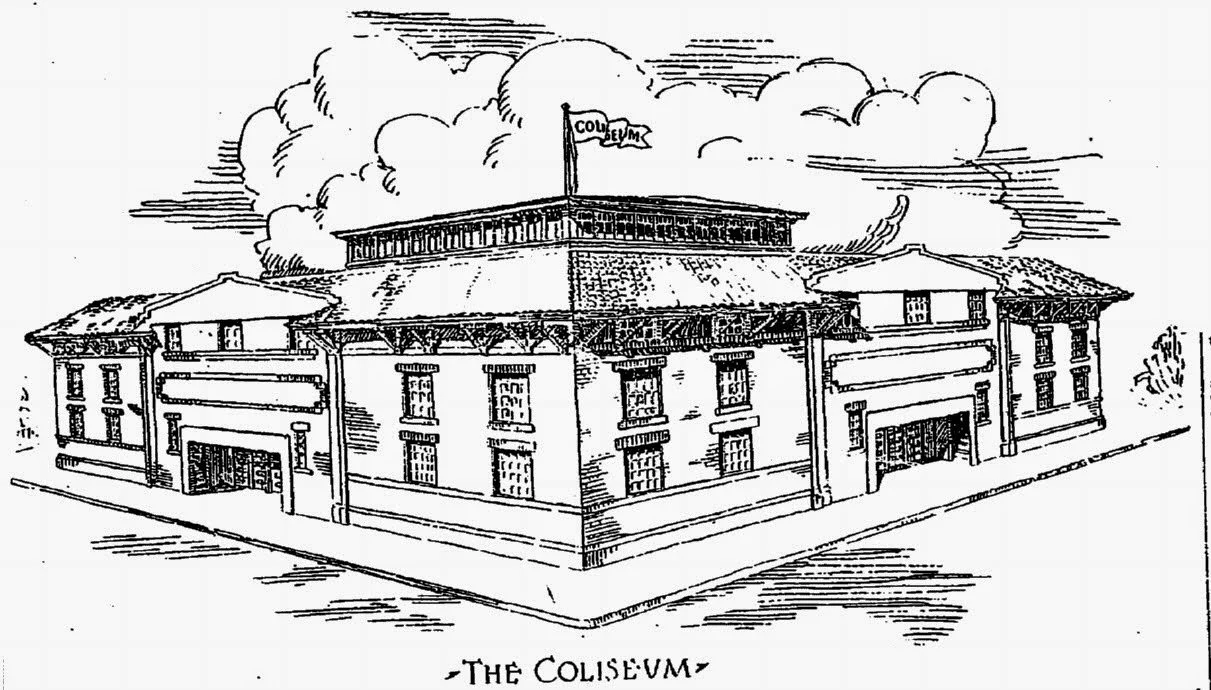
The Coliseum Arena
Date: February 1, 1957
MLK called for non-cooperation with segregation.
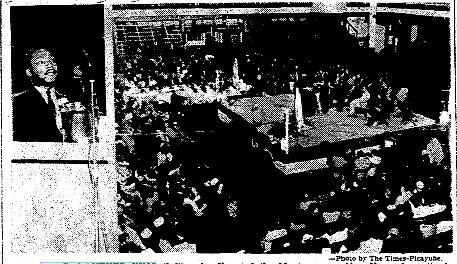
Martin Luther King Jr. spoke at the New Orleans Coliseum Arena at a major rally on February 1, 1957. Over 2,000 people gathered in bad weather to hear him advocate for integration, famously stating that "if democracy is to live, segregation has to die". This visit was a pivotal moment, coinciding with the early days of the Southern Christian Leadership Conference (SCLC) formation and marking his first speech in the city, where he urged Black communities to unite in mass protests against segregation.
Key Details of the 1957 Speech:
Days before the birth of the Southern Christian Leadership Conference, King spoke at the Coliseum Arena, a New Orleans auditorium at 401 N. Roman St., near what's now the Lafitte Greenway. The stadium, which also hosted sporting and music events, closed in 1960.
King — in front of a crowd estimated by New Orleans police at about 2,200 people — predicted that racial integration would be won by 1963 and asked that Black people unite to "protest en masse and refuse to co-operate with segregation," The Times-Picayune wrote on Feb. 2, 1957.
He said democracy and segregation couldn't exist in unison, stating that "if democracy is to live, segregation has to die," The Times-Picayune reported.
The Times-Picayune reported that four speakers dubbed King with biblical names like the "modern Moses," "our Caleb and Joshua" and "the King of our day."
Excerpt from MLK’s last book entitiled, “Where Do We Go From Here: Chaos or Community?:
“These are revolutionary times. All over the globe men are revolting against old systems of exploitation and oppression, and out of the wombs of a frail world new systems of justice and equality are being born. The shirtless and barefoot people of the earth are rising up as never before. “The people who sat in darkness have seen a great light.” We in the West must support these revolutions. It is a sad fact that, because of comfort, complacency, a morbid fear of Communism and our proneness to adjust to injustice, the Western nations that initiated so much of the revolutionary spirit of the modern world have now become the arch antirevolutionaries.”
A photo taken by the Times-Picayune during a meeting that Martin Luther King attended at the New Orleans Coliseum Arena on Feb. 2, 1957.
5. Dooky Chase Restaurant (2301 Orleans Ave)
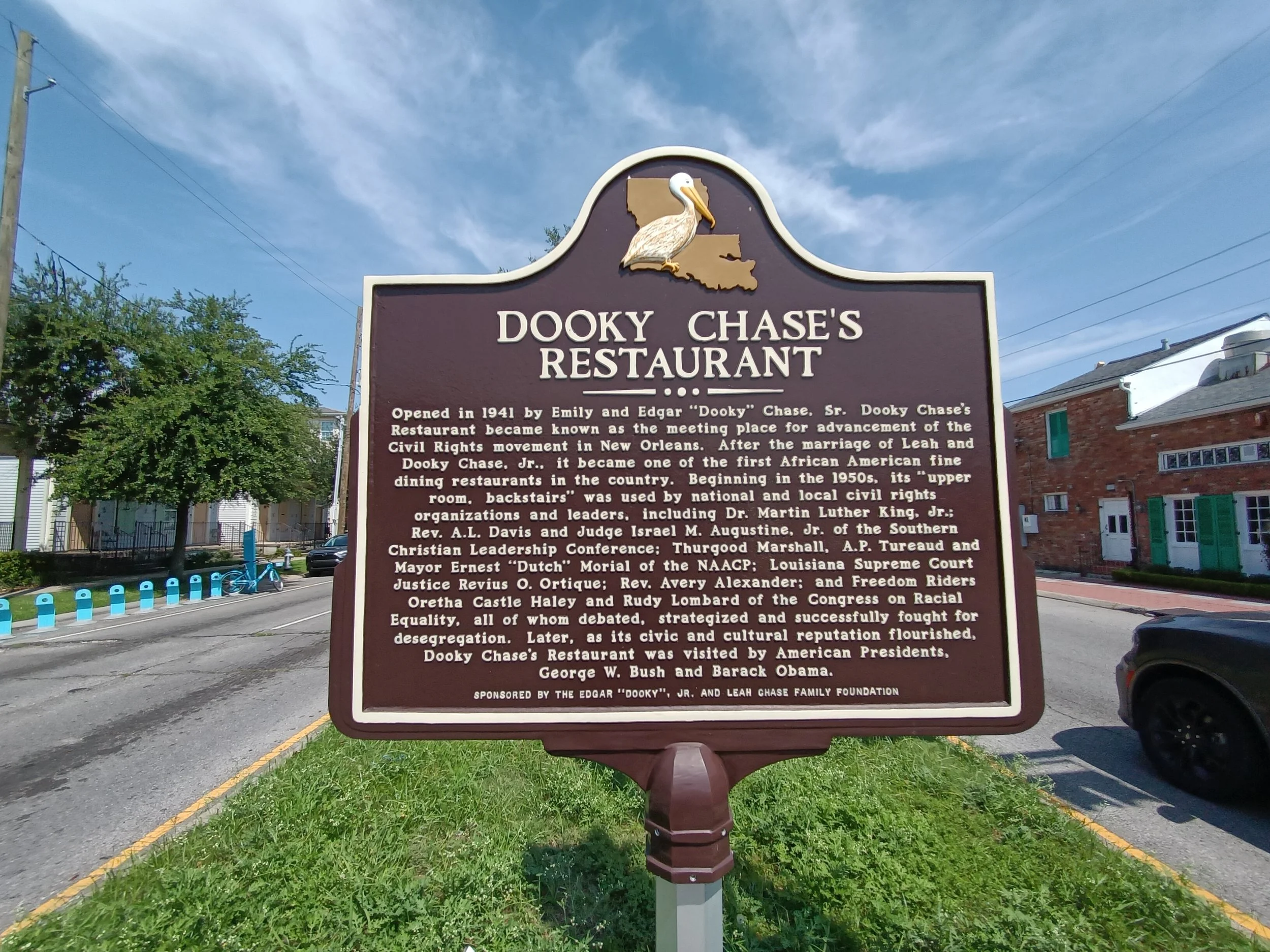
Dooky Chase (2301 Orleans Ave)
Martin Luther King Jr. and other civil rights leaders frequently used Dooky Chase's Restaurant in New Orleans for strategy sessions and meals, with its upstairs room serving as a vital, secret meeting place to plan protests and bus boycotts, fueled by the famous Creole food served by owners Leah and Dooky Chase. The restaurant was a safe haven where King and activists discussed civil rights over gumbo, helping to change the course of America's history.
Key takeaways:
Strategy Hub: Dooky Chase's served as a clandestine meeting spot for leaders like King, Ralph Abernathy, and Freedom Riders to plan major civil rights actions.
Food as a Bridge: Leah Chase believed that sharing meals, especially her cooking, built bridges and fostered understanding, enabling significant change.
Local Organizing: It was instrumental in organizing local protests and voter registration drives in New Orleans.
Community Safe Space: The restaurant was a crucial, protected space where activists, even of different races, could gather despite segregation laws, as shutting it down would anger the public.
Feeding the Movement: Chef Leah Chase cooked for King and other activists, with the restaurant becoming a symbol of Black-owned businesses supporting the movement.
6. Lawless Memorial Chapel (2601 Gentilly Blvd.)
Martin Luther King Jr. delivers the baccalaureate address at Dillard University on May 31, 1959.
Lawless Memorial Chapel (Dillard University)
Date: May 31, 1959
The Three Dimension of a Complete Life
Martin Luther King Jr. spoke at Dillard University, delivering the baccalaureate address, "The Dimensions of a Complete Life," on May 31, 1959, at the invitation of university president Albert W. Dent.
Key Details:
When: May 31, 1959.
What: Baccalaureate address titled "The Dimensions of a Complete Life".
Where: Dillard University campus.
Significance: His presence reinforced Dillard's role in education and social change, continuing his legacy of inspiring justice and equality.
Martin Luther King Jr.'s sermon, "The Dimensions of a Complete Life," describes a fulfilling life as having three parts:
Length(self-care, personal ambition), Breadth(concern for others, community), and Height(spiritual connection to God). King argued that true fulfillment requires developing all three dimensions in harmony, focusing on inner growth, outward compassion, and upward spiritual striving to build a meaningful existence and society.
Text: Revelation 21:16